Source Custom Waterproof Wine Bottle Labels for Shipping, Food, Medicine
Compare 30 listings for Custom Waterproof Wine Bottle Labels designed for bottled beverage, shipping, and food packaging. Buyers can evaluate paper and PET materials, offset and letterpress printing, and ISO-certified suppliers from China.
Key considerations
Products List


Waterproof Custom Red Wine Bottle Roll Label with Private Logo Printing
$0.00 - $0.10
MOQ: 1000 Pieces


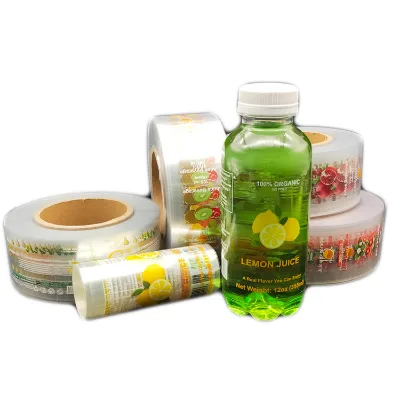


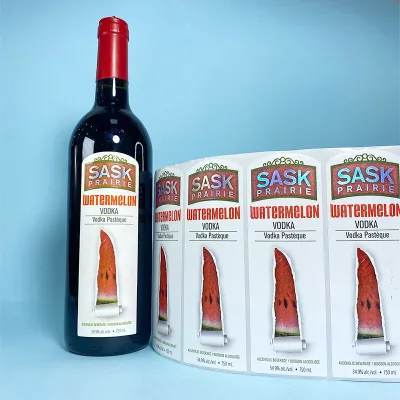
Comprehensive Sourcing Guide
Strategic Sourcing Guide for Custom Waterproof Wine Bottle Labels
Technical Specifications and Material Selection
When sourcing Custom Waterproof Wine Bottle Labels, the primary technical consideration is the substrate material, which dictates the label's durability and resistance to environmental stressors. Wine bottles frequently encounter condensation, refrigeration, and potential liquid spills, necessitating a material that remains intact under wet conditions. The supplied product data indicates a strong presence of Polyester (PET) and Paper as primary material options. PET is particularly critical for applications requiring high durability and waterproof performance, as it offers superior resistance to tearing and moisture compared to standard paper. For buyers seeking a premium feel with a paper aesthetic, high-grade paper with a waterproof coating or laminate is a viable alternative, though the inherent water resistance of PET is generally superior for long-term storage in coolers.
The surface finishing of the label is another vital technical specification. The observed market data highlights "Glossy or Matt Finishing" as standard options. Glossy finishes often enhance color vibrancy, which is essential for wine branding, while matte finishes provide a sophisticated, non-reflective look that can reduce glare on glass bottles. Additionally, specific surface treatments such as Spot UV are available, allowing for localized high-gloss effects that can highlight logos or vintage years. The transparency of the material is also a key factor; while some labels are opaque to cover bottle imperfections, others may require specific transparency levels depending on the design strategy. The data confirms that "Opaque" is a common attribute, ensuring that the underlying bottle color or liquid does not interfere with the label's legibility.
The printing method selected must align with the desired output quality and production volume. The available data lists both Offset Printing and Letterpress Printing as viable techniques. Offset printing is typically preferred for high-volume runs where color consistency and fine detail are paramount, making it suitable for complex wine label designs with intricate graphics. Letterpress printing offers a distinct tactile quality, often used for high-end or artisanal wine brands seeking a traditional, embossed appearance. The choice between these methods will influence the final aesthetic and the cost structure of the procurement.
Compliance, Certification, and Regulatory Standards
For the food and beverage industry, regulatory compliance is non-negotiable. Buyers must verify that suppliers possess valid certifications that attest to their manufacturing standards and product safety. The supplied context explicitly mentions ISO and CE certifications, as well as ISO SGS. These certifications are indicative of a supplier's adherence to international quality management systems and safety standards. ISO certification suggests that the manufacturing process is controlled and consistent, which is crucial for maintaining the integrity of food-contact materials. SGS certification often implies third-party testing for specific product attributes, ensuring that the materials used do not leach harmful substances into the wine or its packaging.
When evaluating suppliers, it is essential to confirm that the specific product model being sourced meets the "custom" standard requirements while adhering to these certifications. The data notes that the "prod_standard" can be "custom" or "Sheet / Roll," indicating flexibility in production standards. However, buyers should not assume that all custom orders automatically carry the listed certifications without verification. The presence of ISO and CE marks on a product page is a strong signal, but the specific scope of these certifications must cover the production of adhesive labels intended for food and beverage applications.
Furthermore, the "custom" nature of the product means that buyers must ensure that any custom materials or inks used in the production process are compliant with local food safety regulations in the destination market. While the data mentions "High Grade" quality, this is a qualitative observation rather than a regulatory guarantee. Buyers should request documentation proving that the specific batch of labels meets the food contact requirements of the target region, such as FDA regulations in the United States or EU Framework Regulation (EC) No 1935/2004 in Europe. The absence of specific test results in the provided data underscores the need for buyers to request independent lab reports for migration testing and heavy metal analysis before placing large orders.
Cost Drivers and Pricing Variables
Understanding the cost drivers for Custom Waterproof Wine Bottle Labels is essential for budgeting and negotiation. The observed price range in the market data spans from 0 to 5 USD, but this range is likely indicative of unit costs for small samples or specific low-volume configurations rather than bulk pricing. The actual cost per unit is heavily influenced by the material type, with PET generally commanding a higher price point than standard paper due to its enhanced durability and waterproof properties. The complexity of the printing process also plays a significant role; offset printing may offer economies of scale for large runs, whereas letterpress or specialized finishing techniques like Spot UV can increase the unit cost.
The Minimum Order Quantity (MOQ) is a critical factor in determining the overall cost structure. The data reveals a wide MOQ range from 1 to 50,000 units. For buyers with lower volume needs, suppliers accepting an MOQ of 1 or 5000 pieces allow for market testing without significant capital commitment. However, higher MOQs often correlate with lower per-unit costs. The data specifically notes an MOQ of 5000 PCS for certain models, which serves as a benchmark for standard production runs. Buyers should be aware that custom orders involving unique die-cutting shapes, specialized inks, or complex finishing may carry higher MOQs or setup fees.
Packaging and logistics also contribute to the total cost. The observed "prod_packing" options include "Carton" or "as Your Requirements." Custom packaging solutions, such as specific carton configurations to prevent label damage during transit, will add to the cost. Additionally, the origin of the product, with mentions of Jiangsu, Guangdong, and Wuxi in China, influences shipping costs and lead times. Buyers should factor in the distance between the supplier's location and their distribution centers when calculating the landed cost. The "Delivery" time of 7 days mentioned in the data suggests a relatively fast turnaround for standard orders, but custom projects may require extended lead times for design approval and material sourcing.
Typical Applications and Functional Requirements
Custom Waterproof Wine Bottle Labels serve a diverse range of applications beyond simple product identification. The data lists usage scenarios including "Custom Sticker," "Bottled Beverage," "Shipping Labels," "Food," "Price Tags," and "Packaging Film." This breadth of application highlights the versatility of the product. For wine specifically, the label must withstand the unique challenges of the beverage industry, such as condensation from ice buckets, humidity in wine cellars, and potential splashes during service. The "Waterproof" feature is explicitly listed as a key attribute, confirming that these labels are engineered to resist moisture without peeling or degrading.
The functional requirements extend to security and authentication. The data mentions features such as "Anti-Counterfeit," "Holographic," and "Barcode." These are particularly relevant for premium wine brands that need to protect their intellectual property and ensure product authenticity. Holographic elements and anti-counterfeit technologies can be integrated into the label design to deter fraud, while barcodes facilitate inventory management and supply chain tracking. The "Heat Sensitive" feature noted in the data could be utilized for temperature monitoring or interactive marketing experiences, adding value to the consumer engagement strategy.
Die-cutting options, available in "Rolls or Sheets," allow for flexibility in application methods. Rolls are ideal for automated labeling machines, which are common in high-volume production lines, while sheets are better suited for manual application or smaller batch productions. The "Cutting Method" is specified as "Sheet/Roll," ensuring compatibility with various labeling equipment. The "Use" attribute mentions "Rotary Printing Machine," indicating that the labels are designed to be compatible with high-speed rotary printing and application systems. This compatibility is crucial for maintaining efficiency in large-scale production environments where speed and precision are paramount.
Supplier Evaluation and Verification
Evaluating potential suppliers requires a systematic approach to verify their capabilities and reliability. The data indicates that suppliers accept "Custom Order" requests and offer "Customization" for material, content, usage, and size. This flexibility is a positive indicator, but buyers must assess the supplier's capacity to handle complex customizations without compromising quality. The "Brand Name" Zhehan is mentioned, but buyers should not rely solely on brand recognition; instead, they should verify the supplier's track record in producing similar products.
The "Place of Origin" is listed as Jiangsu, Guangdong, and Wuxi, China. While these regions are known for manufacturing capabilities, buyers should verify the specific factory location and audit the facility if possible. The "Design Drawings" requirement of Ai, Psd, Pdf, and CDR formats suggests that the supplier is equipped to handle professional design files, which is essential for precise production. Buyers should ensure that the supplier has a robust process for reviewing and approving design proofs before mass production to avoid costly errors.
Quality control is another critical aspect of supplier evaluation. The "Quality" attribute is listed as "High Grade," but this is a general observation. Buyers should request samples to physically test the label's adhesion, water resistance, and print quality. The "Feature" list includes "Waterproof," "Anti-Counterfeit," "Holographic," "Barcode," and "Heat Sensitive," and buyers should verify that the specific product they are sourcing includes these features as claimed. The "Standard" is noted as "custom," which means the supplier must be able to meet specific buyer requirements rather than relying on a one-size-fits-all approach.
Quality Control and Long-Term Procurement Considerations
Implementing a rigorous quality control (QC) process is essential for maintaining the integrity of Custom Waterproof Wine Bottle Labels. Buyers should establish clear acceptance criteria based on the technical specifications provided, such as adhesion strength, color accuracy, and resistance to water and abrasion. The "Surface Treatment" of Spot UV and the "Surface Materials" of PET or Paper must be verified against the approved samples. Regular QC checks during production can help identify and rectify issues early, preventing the distribution of defective labels.
Long-term procurement considerations involve building a sustainable relationship with suppliers who can consistently meet quality and delivery expectations. The "Delivery" time of 7 days is a benchmark, but buyers should negotiate lead times that align with their production schedules. The "MOQ" of 5000 PCS or lower allows for flexibility, but buyers should plan for volume increases to leverage economies of scale. The "Customization" options for material, content, and size should be standardized where possible to streamline the ordering process and reduce setup costs.
Additionally, buyers should consider the environmental impact of their label choices. While the data does not explicitly mention eco-friendly materials, the availability of "Paper" as a material option suggests that sustainable choices may be available. Buyers should inquire about the recyclability of the labels and the sustainability of the manufacturing processes. The "Certification" of ISO and SGS can also serve as a proxy for environmental compliance, provided the certifications cover sustainability practices.
Comparative Analysis of Label Options
To assist buyers in making informed decisions, the following table compares key attributes of the observed label options based on the supplied data. This comparison highlights the differences in material, finishing, and features to guide the selection process.
| Attribute | Option A: PET-Based | Option B: Paper-Based | Option C: Hybrid/Custom |
|---|---|---|---|
| Primary Material | Polyester (PET) | Paper | Mixed/Custom |
| Water Resistance | High (Inherent) | Moderate (Coated) | Variable |
| Surface Finish | Glossy, Matt, Spot UV | Glossy, Matt | Custom |
| Printing Type | Offset, Letterpress | Offset, Letterpress | Custom |
| Special Features | Anti-Counterfeit, Holographic | Standard | Customizable |
| Die Cut Format | Rolls or Sheets | Rolls or Sheets | Rolls or Sheets |
| Typical MOQ | 5000 PCS | 1-50000 PCS | Custom |
| Certification | ISO, CE, SGS | ISO, SGS | Custom |
This table illustrates that PET-based labels offer superior water resistance and durability, making them ideal for wine bottles that will be chilled or exposed to moisture. Paper-based labels provide a traditional aesthetic but may require additional coatings for waterproofing. Hybrid or custom options allow for tailored solutions but require more rigorous supplier evaluation to ensure consistency. Buyers should weigh these factors against their specific brand requirements and budget constraints when selecting the optimal label solution.
FAQs
What materials are used for Custom Waterproof Wine Bottle Labels?
The primary materials used are Polyester (PET) and Paper. PET offers superior durability and moisture resistance, while high-grade paper with waterproof coatings provides a premium aesthetic suitable for wine branding applications.
Which printing methods are available for these adhesive labels?
Available printing methods include Offset Printing and Letterpress Printing. Offset printing ensures color consistency for high-volume runs, whereas Letterpress offers a distinct tactile quality often preferred for artisanal wine brands.
Can suppliers provide ISO and CE certified waterproof labels?
Yes, suppliers offer products with ISO and CE certifications. These certifications indicate adherence to international quality management systems and safety standards, which is crucial for food-contact materials like wine bottle labels.
What are the typical minimum order quantities for custom orders?
Minimum order quantities range from 1 to 50,000 units depending on the supplier and configuration. Some models specify an MOQ of 5,000 pieces, while others accept smaller quantities for market testing or sample orders.
How long is the delivery time for standard custom orders?
The standard delivery time is approximately 7 days for regular orders. However, custom projects involving unique die-cutting shapes or specialized finishing may require extended lead times for design approval and material sourcing.
Which surface finishes are available for these adhesive stickers?
Standard surface finishes include Glossy or Matt options with Spot UV treatment available. Glossy finishes enhance color vibrancy, while matte finishes provide a sophisticated look, and Spot UV adds localized high-gloss effects for branding.